.png)

CELEBRATING LITERARY TRIUMPHS
PAST WINNERS
Discover the inspiring journeys of writers who have transformed their dreams into reality.
Showcasing Published Works
Book Covers of Our Competition Winners and Runner Ups




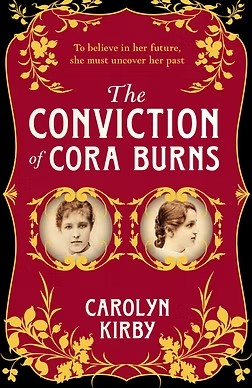
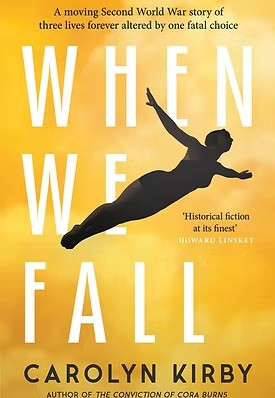
Carolyn Kirby
Carolyn’s debut novel The Conviction of Cora Burns was longlisted for the Historical Writers’ Association Debut Crown Award and shortlisted for the Specsavers Debut Crime Fiction Award. When We Fall was chosen by The Times as one of the best novels of 2020. Her novel Ravenglass will be published by Northodox Press in September 2025. Carolyn won the 2017 First Novel Award.

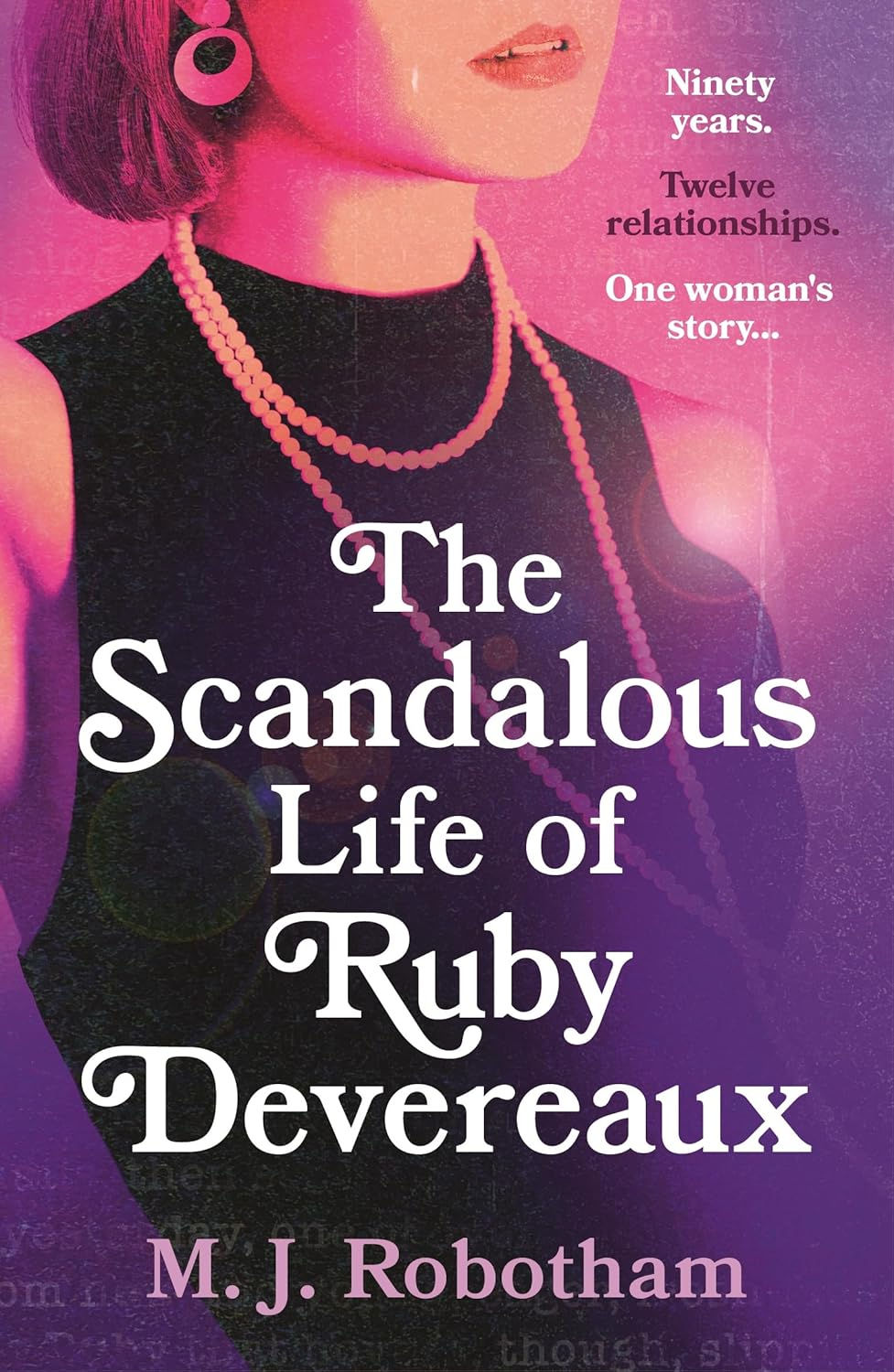
Mandy Robotham
Christina Sweeney-Baird was a corporate litigation lawyer before becoming a full time author and screenwriter. She was longlisted for the 2019 First Novel Award. She is represented by Curtis Brown literary agent Felicity Blunt. Her debut novel The End of Men was published by Borough Press in April 2021.


Jules Lampshire
Jules is a psychologist and psychotherapist by profession, which explains why she writes psychological suspense novels. In 2017 she attended the Faber Academy and in 2018 she won the BPA First Novel Award. She has published two novels under the penname Julia Stone: Her Little Secret in 2021 and The Accident in 2022, both by Orion Dash. The Accident was selected as The Crime Readers Association Recommended Read of the Month in December 2022.


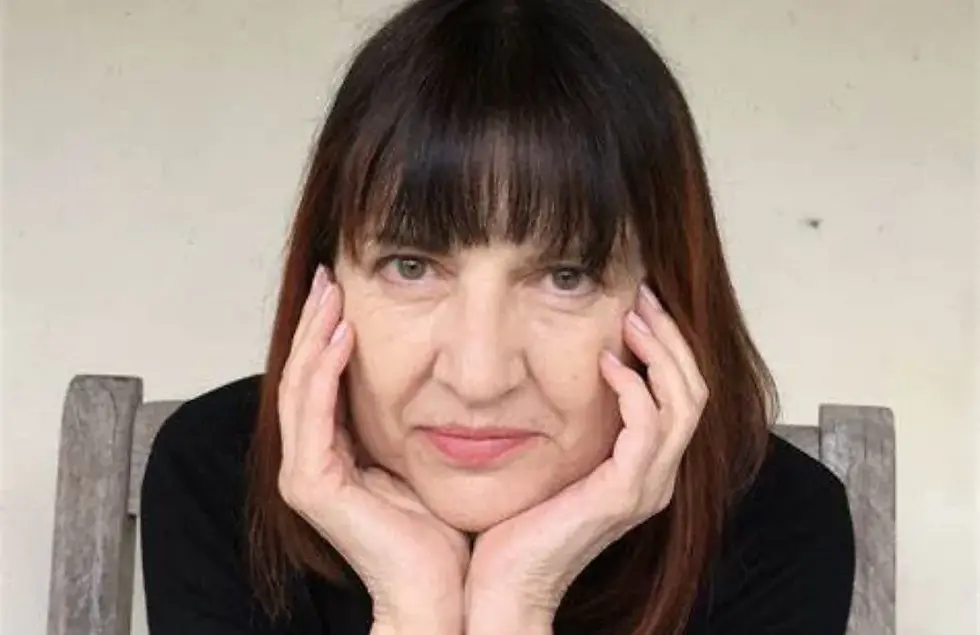
Christina Sweeney-Baird
Christina Sweeney-Baird was a corporate litigation lawyer before becoming a full time author and screenwriter. She was longlisted for the 2019 First Novel Award. She is represented by Curtis Brown literary agent Felicity Blunt. Her debut novel The End of Men was published by Borough Press in April 2021.


Gráinne Murphy
A winner of the Irish Writers’ Centre Novel Fair 2019, Gráinne’s novels have been shortlisted for the Caledonia Novel Award 2019 and Blue Pencil Agency First Novel Award 2019 and longlisted for the Lucy Cavendish Fiction Prize 2018 and Mslexia Novel Award 2017. Her short stories have appeared in the Fish Anthology 2020, RiPPLE Anthology 2017 and Nivalis 2015. Gráinne’s debut novel Where the Edge Is was published in 2020, The Ghostlights in 2021, Winter People in 2022 and Greener in 2024, all by Legend Press.


Neil Daws
Neil achieved Highly Commended in the Blue Pencil Agency’s First Novel Award in 2019 where he met his agent, Nelle Andrew of Rachel Mills Literary agency. He has written three novels in the Kember & Hayes historical crime series: A Quiet Place To Kill (2021), A Silent Way To Die (2022) and A Perfect Time to Murder (2023). His latest cosy crime novel Murder at the Palace was published by Orion Fiction in 2025 and will be followed by Murder at the Tower (2026).


Santanu Bhattacharya
Santanu grew up in India and studied at the University of Oxford and the National University of Singapore. He is the winner of the 2021 Mo Siewcharran Prize, Life Writing Prize and London Writers’ Awards. He was longlisted for the 2020 First Novel Award. His debut novel One Small Voice was an Observer best debut novel for 2023. His second novel Deviants was released in February 2025. He is represented by Jessica Woollard at David Higham Associates.


Róisín Lanigan
Róisín is an editor and writer based in London and Belfast. Her work has appeared in the New York Times, Financial Times, The Guardian and The Fence, amongst other publications. She was longlisted for the Curtis Brown First Novel Prize in 2019, and won the Blue Pencil Agency First Novel Award in 2020. I Want to Go Home But I’m Already There is her first novel. She is represented by Kat Aitken at Lexington Literary.


Amy Twigg
Caroline has been writing for The Irish Times since 2005. She currently writes the Irish Times Home from Home series of author interviews. In 2022, she was longlisted for the First Novel Award. Her debut novel The Marriage Vendetta is set to be released in 2025. She is represented by Kesia Lupo of The Bindery Agency.


Claire Williams
Claire was a 2023 Pitch Prize winner and she went on to secure representation with that year’s Pitch Prize judge Millie Hoskins from United Agents. Her writing has also been shortlisted for the Sid Chaplin Award, the London Independent Story Prize and the Cheshire Novel Prize, as well as published in the 2023 Mslexia’s best women’s short fiction anthology.

Caroline Madden
Caroline has been writing for The Irish Times since 2005. She currently writes the Irish Times Home from Home series of author interviews. In 2022, she was longlisted for the First Novel Award. Her debut novel The Marriage Vendetta is set to be released in 2025. She is represented by Kesia Lupo of The Bindery Agency.


Emma Cowing
Lucy is a graduate of the Faber Academy and the London Library Emerging Writers Programme.She was longlisted for the First Novel Award in 2023. Lucy was selected as one of The Bookseller’s four most promising debut novelists of 2025 and her debut novel The Artist was longlisted for the Women’s Prize 2025 and won the Waterstones Debut Fiction Prize. She is represented by Eleanor Birne at RCW Literary Agency.


Lucy Steeds
Lucy is a graduate of the Faber Academy and the London Library Emerging Writers Programme.She was longlisted for the First Novel Award in 2023. Lucy was selected as one of The Bookseller’s four most promising debut novelists of 2025 and her debut novel The Artist was longlisted for the Women’s Prize 2025 and won the Waterstones Debut Fiction Prize. She is represented by Eleanor Birne at RCW Literary Agency.


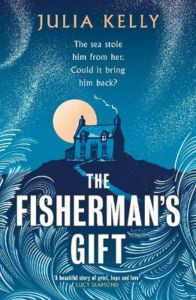
Julia Kelly
Julia Kelly has been longlisted for the Mslexia Novel Prize, the Exeter Novel Prize, PenguinWriteNow, and the Bath Novel Award. In 2021 she won the Blue Pencil First Novel Award and signed with that year’s competition judge, Hellie Ogden. In 2024, she signed a six-figure publishing deal for her debut novel The Fisherman’s Gift.


eligibility
-
Authors must be over 18 years old at the time of entry.
-
The writing competition is open to unrepresented and unpublished authors of fiction at the closing date of May 31, 2026.
-
Writers must advise the organisers if they accept representation during the judging period or win any other prizes. They may still be eligible for the Award.
-
Self-published authors are accepted. Entrants who have had other types of books published such as non fiction, memoir or poetry are also eligible.
-
The novel must be completed or close to completion at the closing date of May 31, 2026. If you have written less than 60k words you might want to consider entering our Pitch Prize later in the year.
-
Long-listed or short-listed entries in other writing competitions are eligible.
-
Entrants may submit more than one novel but as separate entries.
-
We are based in the UK but the competitions are international. Entries must be written in English.
-
Entries can only be submitted electronically online via this site and payment made via Paypal.
-
Entrants may withdraw entries but fees cannot be refunded.
-
Judges’ decision is final. Judges are unable to comment on individual entries.
.webp)
Assistance to writers on low incomes or from under-represented backgrounds
We’re offering a minimum of 20 free entries for UK based writers on low incomes or from communities currently under-represented in publishing. Applications will be reviewed and the most promising submissions will be selected by the BPA team. Please click here to Contact BPA with your application and, if relevant, proof of financial eligibility such as: Jobseeker’s Allowance; Disability Benefit; Income Support; Working Tax Credit; Child Tax Credit; proof of being a full-time student; Housing Benefit; proof of being a full-time carer. All details will be kept confidential.
How to submit
-
Please enter through the link on our website.
-
Upload your opening chapter or chapters up to 5000 words plus a 300 word synopsis and a covering letter with some information about the novel and your career as a writer. Your submission should be three separate documents.
-
Please ensure that the file name is the title of the story.
-
Entries must be in either a doc., docx, or pdf. No other formats will be accepted.
-
Entries must be double spaced in a clear font (Times New Roman or similar) and pages numbered.
-
The novel’s title must be on every page.
-
The covering letter should include the following details: your name, the title of your novel, your email address and telephone number, a brief bio and the genre of your novel if applicable (e.g. uplit, romance, contemporary, historical, psychological thriller, fantasy, crime, women’s, literary).
-
Please tell us how you heard about the BPA First Novel Award. This helps us make the best decisions on marketing to help writers find our writing competitions.
-
Click on the Pay Now button on the page and pay the fee.
-
If payment is made using a different name, it is essential you include that name in your cover letter.

interview with our judges

What makes a first chapter stand out for you?
For me – like, I imagine, for most readers – the thing that makes me sit up straighter when I’m reading the first chapter of a book or a manuscript is an assured sense of the narrative voice coming through, coupled with an opening that invites us into the world of the story in a surprising or unforeseen way, perhaps by starting in an unusual place or with an unexpected statement. I think you can always feel quite quickly when a first chapter is going to be effective in making you hungry to read on.
Are there any common pitfalls you see, or tips you’d offer to writers submitting to this award?
The key tip I would give is to read as much of the work of other writers in your genre as possible so that you can see what it takes for a manuscript to be of a publishable standard in your corner of the market. Ahead of submitting to the award, I’d also suggest sharing your work with beta readers – friends, family, colleagues – who can give you feedback before submitting. The most common pitfall I see that can hold back exciting projects is when something feels rushed or the idea is not fully crystallised, so taking the time to receive and apply early feedback can be transformative.
Is there a quality you find consistently present in the authors you’re drawn to?
I always find myself drawn to writers who have a strong sense of having something that they want to say with their work, who let their ideas and perspectives permeate the characters and storylines of their written world in a story-forward way. Care and attention being given to the style and the writing is also always something that I look for.
The First Novel Award is open to all adult genres. Is it still worth entering if a submission falls outside the genres you personally represent?
Definitely! My agency, Madeleine Milburn Literary, TV & Film Agency, represents all areas of adult fiction and I’ll be excited to read with talent spotting in mind for my brilliant colleagues as well as myself.
What will you be looking for across the competition entries? Are there particular genres, themes, or qualities you’re currently most keen to represent?
I’ll be looking for quality writing paired with an engaging concept that feels fresh and exciting. I know that sounds quite simple, but I think those are the key main ingredients of all the best books!
How do you think your judging perspective might differ from Freya’s? Are there areas where you expect your tastes or priorities to diverge?
I suppose as an agent I have more experience of reading larger volumes of unpublished work than Freya does, so may be more used to seeing work in a slightly more raw, unedited form. That said, as a writer with so much experience of developing her own and others work, I know that Freya will be able to see the spark of talent and heart in a manuscript in a way that I won’t. We worked closely together on her debut novel, and I am very excited to bring our collaboration to this judging panel!

What will you be looking for across the competition entries?
I know a book has really stayed with me if I continue thinking about a character long after the final page. For me, compelling fictions lives in characters who see the world from a unique perspective—someone whose lens on life feels both specific to them and revelatory to us as readers. I’ll be looking for characters I want to spend time with, who become more complex and intriguing with each page turn. The best characters have inner lives that feel fully realised. What are their hopes and dreams? What do they want versus what do they need? I’m drawn to that tension, when a character is chasing something on the surface, but we can sense there’s a deeper longing underneath. That kind of complexity makes characters feel real and that’s something I’ll be looking for in the entries.
What are your top tips to nailing that first page?
‘Start in the middle’ is a good piece of writing advice I’ve followed. I often find when I’m editing a draft I can look at my first few chapters and cut them entirely to start further into the action. Don’t worry though, this doesn’t mean the writing was wasted. Quite the opposite! It’s always helpful to ‘write your way in’ to a story as there’s lots of details you, as the writer, will need to know. Readers should be following your story with a list of questions that you reveal the answers to at just the right moment, so thoughtfully consider where your first page should start. Trust that readers can catch up and have confidence in your ability to guide them from page one.
When you’re happy with where your story starts, read it aloud. It’s a great way to edit as you’ll hear where your story loses momentum or if the rhythm is a little off. When you find yourself reading with a smile (or even adding voices for drama) you’ll know you’re proud and it’s ready!
What advice would you give to writers submitting their work to agents and competitions?
Help an agent or judge get in the right frame of mind for your submission by giving comparative titles. This will help them imagine where your work would sit in a bookstore and who your readership might be. When I first sent an early draft of my novel to Olivia I remember writing, “I like to think if Nick Hornby and Meg Mason went on a British birdwatching weekend, this would be a little like their field notes.” I’ve often felt it’s a bit awkward (maybe even showy?) to list authors you love alongside your own work but be brave! Submissions aren’t the place to be shy. Comparative titles are also a great way of demonstrating your personality so have fun with it. It’s also helpful to think beyond books. What is your audience watching, listening to or consuming? Is this The Bell Jar for the Labublu generation? Or how about a novel with the identity deception of Yellowface set in the high-pressure kitchen environment of The Bear?
Your debut memoir, The Tidal Year, was published to great success and shortlisted for the Nero Book Awards. Congratulations! Could you tell us a little about that experience?
I’m so proud to have been shortlisted for the Nero Book Awards. Success in publishing is often measured in book sales or prizes, but I think the true mark of success is touching readers. I feel so lucky that The Tidal Year found its people. It’s a very personal story and there were times I felt nervous to share so much of myself, but I really believe if you show vulnerability, you’ll receive it back. Readers often message me with their own loss stories and that exchange feels incredibly powerful. My experience of grief had previously been quite isolating but writing that book has been full of connection. Being acknowledged by the Nero Book Awards helped my book reach so many more people, and for that I’ll always be grateful.
Could you share a little about your writing journey, and how you came to be represented by Olivia?
I was a copywriter (mostly writing album reviews and interviews with musicians) for many years but never had the confidence to write my own story. When my brother died, I found that keeping a diary and creative writing were giving me comfort and helping me process things. For a while I worked on a novel about a group of women who met at a bereavement retreat but the story wasn’t working. It lacked heart and honesty because I was hiding that it was really about me. When I finally had the courage to step into the story and write a memoir, it felt like I unlocked something.
My next book, and first novel, is out next June with Hutchinson & Heinemann and I’m very excited about it. When I made the shift from memoir to fiction, the support I needed for my writing changed and I decided it was time for a new agent. I was a huge admirer of Olivia’s list and liked that MMA was a close team so emailed her a draft of two projects I was working on. Some time passed, so I assumed I wasn’t what she was looking for. Then one day she replied saying she’d been on holiday and asking if I was still meeting agents. I couldn’t believe my luck! I trusted her from the moment we met. She’s genuine, asks smart, insightful questions and knows books better than anyone I know.
Having the opportunity to work with Olivia has been a career highlight for me. She’s everything I was looking for in an agent, someone editorially and commercially business minded. And it helps that I enjoy spending time with her! This year we went on submission with my debut novel and it was bought at a multi-way auction so I think we’re an unstoppable team.
We always include both an author and an agent on our judging panel. How do you think your perspective on the entries might differ from Olivia’s?
One of Olivia’s many talents is that she has such sharp insights into the commercial industry. Olivia knows what sells, what doesn’t and has an exceptional ability to find what (and who) is going to be big next. I’m always impressed by how widely and quickly she reads. I also read a lot but can often get stuck within specific tastes if I’m looking for inspiration for an upcoming project. Of course, Olivia must have her own tastes too, but I think being a good agent is about understanding the tastes of many audiences.
I tend to read with a writer’s lens. I’m drawn to exceptional craft, distinctive voice and flashes of brilliance that make me want to study how they pulled it off. I’ll be looking for entries that teach me something new about what’s possible on the page.
Any other helpful tips?
Write a story only you can write. Like every author, I’ve been through phases of feeling insecure about my writing. ‘Surely someone else has said this better,’ I’ve thought. And before publishing The Tidal Year I worried that there were already too many books about grief and nature. But there was no book about grief and nature that had said what I wanted to say in my voice. So, I held on to that. You may be writing in a saturated genre, but how can you add to the canon of books you already admire in a way that’s unique to you?
And remember… as with all things in life: what’s meant for you, won’t pass you by.
Before entering, please ensure you familiarise yourself with the Rules, Terms and Conditions, and Privacy Policies. Entering the Blue Pencil First Novel Award is taken as your full agreement. Do not enter after the closing date of May 31, 2025 as your entry will not be valid.




Want to keep up with all the latest
Events, Workshops, Online Courses?