.png)

BPA Short Story Award 2026
%20(1800%20x%201800%20px)%20(1).jpg)
The BPA Short Story Award is a competition created to discover emerging voices. Short stories are often a gateway to novel writing, and agents are always looking for exciting new talent.
The BPA Short Story award
The Short Story Award is open to unrepresented writers anywhere in the world. All you need is a complete short story up to 2,500 words.
Prize: cash + agent introduction, 1st Prize £1,000 + agent introduction, 2nd Prize £300, 3rd Prize £100
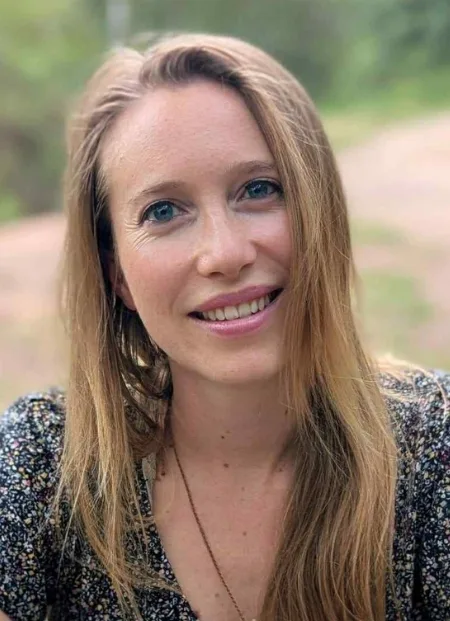
This year's judges are literary agent, Corissa Hollenbeck, at Janklow & Nesbit, and writer, Sussie Anie.
Submission:
Short story of up to 2,500 words
Online entry via BPA website
Cost of Entry: £22
Timetable:
Entries Open: 15 June, 2026
Entries Close: 13 September, 2026
Winners Announced: 18 November 2026
Prize: cash + agent introduction, 1st Prize £1,000 + agent introduction, 2nd Prize £300, 3rd Prize £100
Before entering, please ensure you familiarise yourself with the Rules, Terms and Conditions, and Privacy Policies. Entering the BPA Short Story Award is taken as your full agreement.

sussie anie
Sussie Anie is a British-Ghanaian writer based in London. Her short stories have been published in Lolwe, and shortlisted for the White Review Short Story Prize. She has an MA in Creative Writing from the University of East Anglia, where she was the recipient of the Kowitz Scholarship. Her first novel, To Fill a Yellow House, was longlisted for the Authors' Club Best First Novel Award and won the Somerset Maugham Award. In Meadowlight is her second novel, due to be released in August 2026.

Corissa Hollenbeck
Corissa Hollenbeck grew up in Massachusetts and attended Phillips Academy Andover, King’s College London, the University of Freiburg, and the Columbia Publishing Course. She worked at VICE, Marie Claire, and The Guardian, before joining the Janklow & Nesbit Literary Agency.
Whilst assisting literary agent and Managing Director, Will Francis, Corissa worked with a broad range of prize-winning and bestselling authors. She is now actively building her own client list and is looking for writers who can help readers see the world differently.
meet the 2026 short story award judges
interview with our judges
Why, as an agent, are you interested in judging a short story competition?
It’s a great way to find to new literary talent. As a writer, it’s time consuming, not to mention daunting, to submit a full manuscript to an agency. I think a short story competition draws a wider array of writers than my submission inbox.
Are you open to representing a short story collection? Do you already?
I’m afraid I believe short story collections make tricky debuts. Often times readers are more interested in reading a short story collection from their favourite (already established) authors. That being said, I’ll never say never.
What will make a short story stand out to you when judging this competition?
A distinct voice. My favourite kind of story is one that draws you in despite yourself and is so clearly one of a kind, you can’t stop thinking about it.
Is there a short story collection you find yourself recommending again and again?
SHIT CASSANDRA SAW by Gwen E Kirby. It’s a wild and electric retelling of Greek myths, re-written as modern archetypes.
When reading agency submissions, how much weight do you give to short story competition wins and publications?
A lot! I love checking a bio and seeing that a writers’ work is award winning and/or published. It’s a green flag that shows me that a potential client takes their writing seriously.
Do you find that the authors you represent return to short fiction even after publishing novels? And if so, why do you think that is?
Absolutely. I think it’s a great way for an author to play around with a concept without the need to fully realize it. Often times an idea will come to mind – and it doesn’t come to fruition as a novel – but it’s still worth exploring those themes/characters/tone. I also think short stories are free from the constraints and expectations that come with being a published author.

What do you love about the short story form?
I love short stories for their focus and intensity, whether in the experience of writing or reading them. To get into flow and write an idea to a satisfying conclusion in one sitting is possible with a short story, and that can involve a level of focus that can feel exhilarating. Short stories can also be demanding, and I respect that. I mean that in terms of what a short piece asks of both the reader and the writer. A good short story can stop time - command full attention, and for this I find short stories immersive in ways that feel more brilliant than longer works tend to be. Short stories also require focus and control from writers. They invite (and challenge) the writer to bring the best out of an idea, and can surprise both reader and writer with a twist or singular moment that comes to define the story.
Who is your favourite short story writer and why? And what is your favourite short story of all time?
I tend to have favourite stories rather than specific writers, and this is ever-changing, but I often find myself recommending Ted Chiang’s short stories. His work is consistently refreshing, profound and expansive. His ideas are timeless, yet also timely, with reflections on technology and the human experience that feel all the more urgent now. I also admire Jen George’s short story, Guidance / The Party. Fun and wise.
What are the ingredients of a successful short story?
There is no single recipe that guarantees ‘success’, which may have different meanings for different writers. In general though, short stories can work well when they are thematically focused and when writers allow space for characters to reveal themselves. Dialogue can play a significant role in a short piece too, and can keep the story moving while revealing more about characters and their relationships.
You were shortlisted for the White Review Short Story Prize. Congratulations! What did that achievement bring to your career?
Thank you! That was a very special moment for me. I remember feeling satisfied with the story I submitted at the time of writing it, excited about how it had come together, and about the connections it revealed, but I was not sure what, if anything, I could do with it in the ‘real’ world. I had a lot of fun with language and ideas writing it, but was not sure it would find readership beyond the Creative Writing MA I was studying then, so to realise, when it was shortlisted, that people enjoyed it was incredible. I had just signed with my agent not long before the shortlist was announced. Publishing was a new world to me, so it was surreal to have so much interest from this story. Editors reached out to me over social media and asked if I was writing a novel. It was also wonderful to see readers responding to the story. I had mostly only shared work with fellow writers before that point. It led to more connections, including the publication of my short story in Reverse Engineering, by Scratch Books, which has in turn led to some wonderful events and new circles of brilliant writers and readers. It encouraged me to stay playful and to see the short story as a great form for taking risks.
Would you encourage authors to write short stories, and why?
Yes. Short stories can be excellent for exploring ideas and characters, as well as for making space to stay playful as a writer and thinker. I think the shorter form allows for experimentation without the pressure of maintaining the flow or logic of a longer work. They can be fun, particularly if you can immerse yourself and write without overthinking; you can always return to edit a draft later. It can be thrilling and affirming to complete a shorter work, to create something to refine and share. It’s a great way to develop control and style as well, and to get your writing out into the world, for feedback and to connect with readers.
What advice would you give to a writer entering a short story competition for the first time?
Be bold and write about what interests (or unsettles) you. Take your time; even if a draft comes together quickly, it can help to leave it for a while before coming back to edit it. Above all else, have fun.
event recording

eligibility
-
Authors must be over 16 years old at the time of entry.
-
The writing competition is open to unrepresented and unpublished authors of fiction at the closing date of 13 September, 2026.
-
Writers must advise the organisers if they accept representation during the judging period or win any other prizes. They may still be eligible for the Award.
-
Self-published authors are accepted. Entrants who have had other types of books published such as non fiction, memoir or poetry are also eligible.
-
The short story must be completed at the closing date of 13 September, 2026.
-
Previously published or prize-winning short stories are accepted, provided no magazine, journal, or competition retains exclusive publication rights.
-
Entrants may submit more than one short story but as separate entries.
-
We are based in the UK but the competitions are international. Entries must be written in English.
-
Entries can only be submitted electronically online via this site.
-
Entries must be 12 pt and 1.5- or double-spaced.
-
Entrants may withdraw entries but fees cannot be refunded.
-
Judges’ decision is final. Judges are unable to comment on individual entries.

Who can enter?
-
We welcome short stories from unrepresented writers of any nationality, writing in English, who are aged 16 or over at the closing date.
-
Your work, your words: Your entry must be entirely your own original work. Submissions found to be otherwise will unfortunately be disqualified.
-
Previously published or placed work: Previously published or prize-winning short stories are accepted, provided no magazine, journal, or competition retains exclusive publication rights. Not eligible are those who have traditionally published a novel or short story collection.
-
Simultaneous submissions: You're free to submit your story to other competitions at the same time.
-
Use of AI - work that has been produced, enhanced or edited by any AI creation tool is ineligible. Use of AI is restricted to basic spelling and grammar checks only.
-
Posthumous submissions: We're unable to accept entries submitted posthumously.
What we’re looking for:
-
any genre with the exception of children’s fiction and non-fiction. YA is permitted provided there is an adult crossover.
-
a strong voice.
-
the makings of an original and compelling story.
-
an attention grabbing first paragraph.

Assistance to writers on low incomes or from under-represented backgrounds
We’re offering a minimum of 20 free entries for UK based writers on low incomes or from communities currently under-represented in publishing.
Applications will be reviewed and the most promising submissions will be selected by the BPA team.
Please click here to Contact BPA with your application and, if relevant, proof of financial eligibility such as: Jobseeker’s Allowance; Disability Benefit; Income Support; Working Tax Credit; Child Tax Credit; proof of being a full-time student; Housing Benefit; proof of being a full-time carer.
All details will be kept confidential.
BPA Events
 Write Human: Voice & CharacterisationWed 30 SeptBàrd Books
 Pitch Prize 2026: Meet the JudgesTue 06 OctVirtual Event
 Write Human: Pitch & SynopsisWed 14 OctBàrd Books