.png)

Shortlist Reading
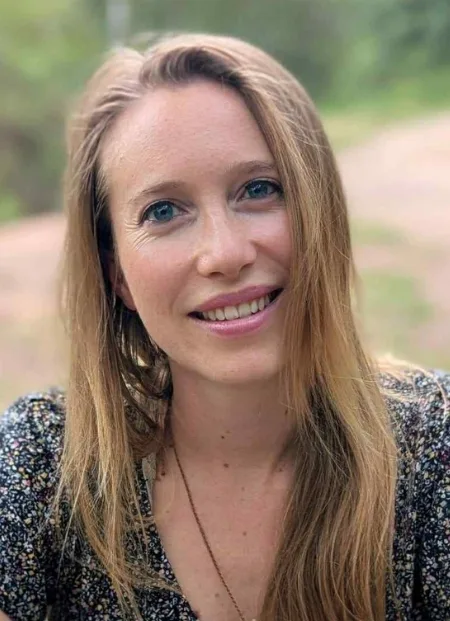

Our five shortlisted writers have now sent 20,000 words each ahead of our final judges’ meeting in early October. This is one of my favourite stages of the competition: I (Frances) have loaded them onto my Kindle and I’m reading them as if they’re published books.
And they couldn’t be more different. In Gold, Kimchi and Yellow Silk, an honest police sergeant in 1960s Korea brings home a foundling to his wife, who is grieving their stillborn son. In Loch Assynt, a terminally ill father returns to the Scottish Highlands to find out what really happened to the son who vanished fifteen years ago. She Walked on Water tells the true story of a children’s scuffle over a crust of rye bread that sparked a witch hunt that claimed 300 lives in 17th-century Sweden. In Observation Error, a grieving expat journalist, flooded out of her Amsterdam apartment, finds a Czech builder who offers her his houseboat, and a 93-year-old survivor of the Great Flood of 1953 who wants to teach her to swim. And Comets follows two young people in London whose love story splits in two: one future where the world survives a comet, and one where it doesn’t.
So how do five such different books rise to the top of the same competition? A friend recently asked me a related question: how can you be objective when reading? I told her you can just tell when something is good, regardless of personal tastes. Good writing has authority; you sense the writer is in command of the language and the story. But I’ve since realised there’s a more practical answer to how you can tell.
As an editor, I read a lot of brilliant, published novels alongside a lot of works in progress. When I’m assessing a manuscript, my editorial voice runs constantly: Get out of the character’s head and give us a live scene. Stop getting in the way with all those coalescing, effervescing adjectives. Show us what question this story is asking. It can sound harsh, but that voice never really switches off.
When I read competition entries, it’s still there, ready to pounce. If I find myself wishing the author had spotted something that’s letting it down, I know the manuscript isn’t ready yet. If that voice stays quiet, I start to feel I could be reading a winner.
That’s how we’ve arrived at such a varied shortlist. Our editors are all professional readers with an instinctive urge to give feedback. When a manuscript leaves us with almost nothing to say except, ‘Wow, I’m hooked,’ we know it deserves to be published.
That doesn’t mean manuscripts that feel more raw or ‘in development’ can’t reach the longlist or shortlist too. If a voice or idea is strong enough to stand out despite needing an edit, if it feels fresh and unlike anything we’ve read before, it can make the cut. Originality and a strong voice can outweigh polish.
But if there’s one message I’d like to leave with every writer entering competitions or submitting to agents, it’s this: have you had your work critiqued? It’s impossible to hear that editorial voice clearly on our own work – and having someone else apply it is one of the best things you can do for your writing.
If a manuscript assessment or submission package review isn’t within budget, try an online writing course or find a trusted reader who isn’t afraid to be blunt. Because above everything else, writers need a reader’s response. It’s how we learn to rewrite – and ultimately how we make sure our work speaks to people.
Keep an eye out for the next post from Sara and Frances on what they personally loved about the five shortlisted titles – and the process of choosing the ‘BPA Favourite’, an extra prize given to the most promising author on the longlist.

Comments